
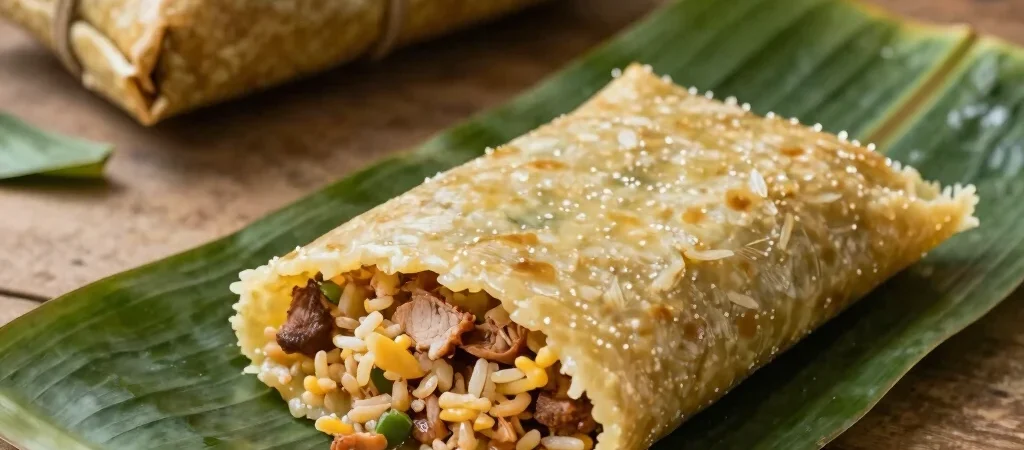
A nacatamal does not begin when it reaches the plate. It begins earlier, with masa being prepared, fillings assembled, and banana leaves laid out for wrapping. The work takes time, which helps explain why making nacatamales can become a shared kitchen task rather than a quick solo dinner.
What Goes Inside
Nicaraguan nacatamales are built around corn masa and are commonly filled with pork, rice, and vegetables such as potato or tomato. Seasonings and additions can differ between households, so a description of one filling should not be mistaken for a universal recipe. The masa and its wrapped parcel provide the structure for a substantial meal.
Banana leaves are folded around the masa and filling, then tied to keep the parcel together during cooking. Wrapping takes practice: the folds need to hold, but they need not look identical from one cook to another. The leaves also give the process its recognizable form before the parcel is even opened.
Time Is Part of the Recipe
Because the parcels need to cook through, nacatamales call for more planning than a skillet meal. It helps to arrange the ingredients and prepare the leaves before assembling, especially when several people are working together. One person can portion masa while another adds the filling and folds each parcel.
That shared effort is part of the food’s story, but it does not mean every family follows the same schedule or filling. For a first look, notice how the masa, ingredients, and leaf wrapping work as one. Nica Premium presents these details in English and Spanish, making the dish’s everyday context easier to explore.